Return to the video animation: we know that Lea has her family’s oral testimonies and photographs from community members, and that she has digitised them. Now she wishes to make this material available through the online archive of a local history project.
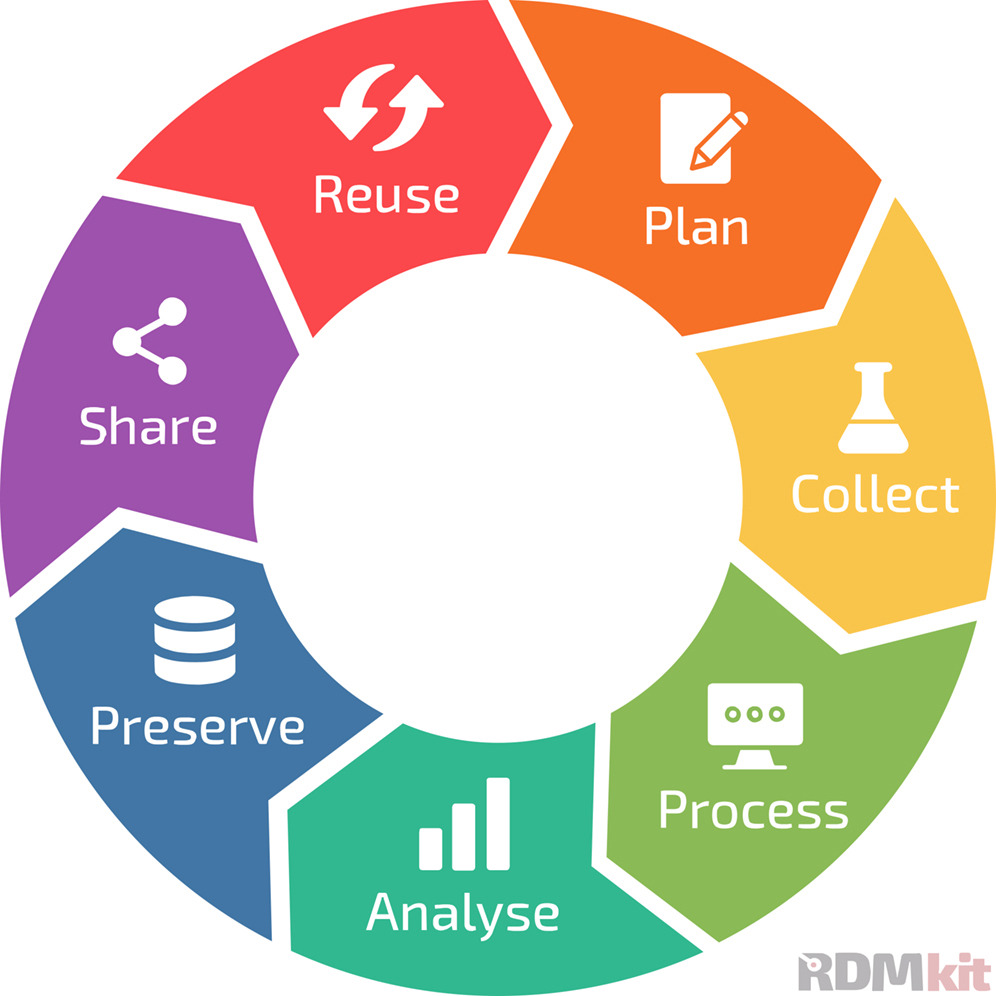
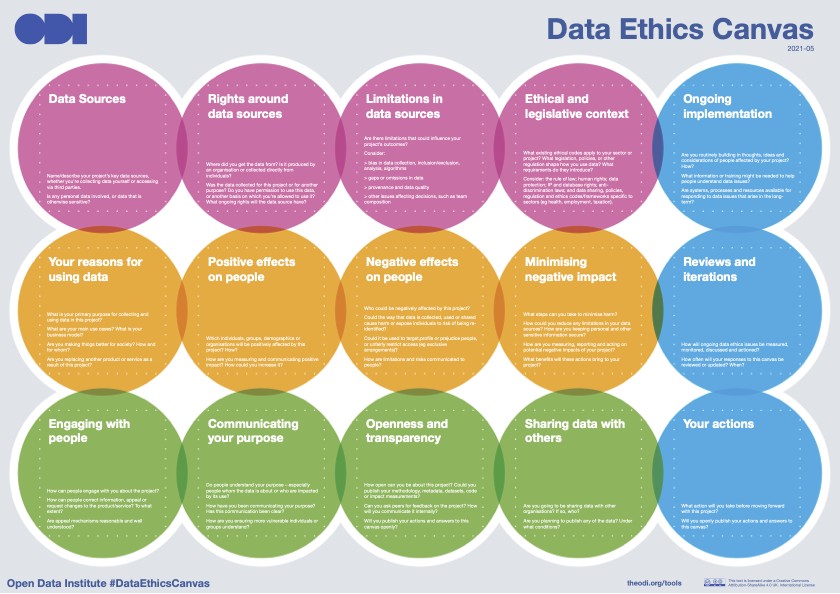
When Lea digitised these materials, she turned them into digital data. Following the data lifecycle stages, we will trace the main ethical questions that arise at each stage for this project.
For the sake of the exercise, focus on the stages of acquisition/collection, publication and archiving/reuse. For each stage, we have provided a brief description of the situation and a set of questions. If you are working in a class, these can be discussed in small groups; if working alone, write brief notes on each.
Acquisition/Collection
Imagine that Lea conducts recorded interviews with twelve community members; she also receives donations of more family photographs. She obtains consent forms from each participant.
- One participant asks that their interview be kept confidential during their lifetime but made available after their death. How should Lea record and manage this condition? What happens if she loses the consent form?
- The photographs were taken by various family members over several decades. Who holds copyright: the person who took the photograph, the person depicted in it, the person who donated it or the family as a whole? How can you find out?
Data minimisation is the principle of collecting only the information actually needed to meet the objectives of a project. This means that even if you can, and even if contributors offer it, you do not collect more information than necessary. Data minimisation is both a key principle in regulations on personal data, such as the GDPR, and a good research practice.
Going further: Are there categories of information Lea should not collect, even if contributors offer them?
Publication
Lea is now ready to make the collection available online.
- Two interviewees have died since the interviews were conducted. What are Lea’s obligations – should she contact their heirs, and if so, what for?
What happens to consent when a contributor dies? (click to expand)
In most legal frameworks, privacy rights do not survive death, meaning that the personal data of a deceased individual is generally no longer protected under regulations such as the GDPR. However, legal frameworks vary by country, and some national laws do extend certain protections beyond death. Beyond the legal question, there is also an ethical one: even if the law does not require it, many archivists and researchers consider it good practice to notify next of kin before publishing material involving deceased individuals, particularly when that material is of a sensitive or personal nature. Oral history associations have developed specific guidelines on this matter.
For guidance: Oral History Association. Archiving Oral History — Ownership and Rights Management
- What licence should Lea attach to the published material? What are the implications of choosing a Creative Commons attribution licence versus a more restrictive licence, or no licence at all?
What is a licence? (click to expand)
When you make a document, photograph or any other creation publicly available, a licence tells others what they are and are not allowed to do with it. Without a licence, the default position in most countries is that all rights are reserved, meaning that no one can legally reuse the material without requesting permission. Creative Commons (CC) licences offer a flexible middle ground. They allow creators to share their work while specifying the conditions of reuse. The most common conditions are:
BY (Attribution) – anyone can reuse the material, provided they credit the creator
NC (Non-Commercial) – reuse is permitted for non-commercial purposes only
ND (No Derivatives) – the material may not be modified or transformed
SA (Share Alike) – adaptations must be shared under the same licence
These conditions can be combined. For example, CC BY-NC allows reuse with attribution but not for commercial purposes. The most open licence, CC BY, requires only attribution. The most restrictive, CC BY-NC-ND, limits reuse to non-commercial contexts and prohibits any modification. For more information, see the Creative Commons website.
</details>
- Sometimes, the consent given at the collection stage may not be sufficient for the publication stage. Think about the difference between consenting to an interview and consenting to your words being permanently and publicly accessible on the internet (Thompson and Bornat 2017).
Archiving and Reuse
At the end of the video animation, we see that Lea has the intention to contribute the digital data in her collection to a local history project that will then publish them on the project website. Lea essentially delegates the responsibility of long-term preservation to a regional digital archive. By making the data available online, she is also making it possible for this material to be downloaded or shared by anyone and reused in new contexts.
- Should Lea deposit all the material in her collection or only material for which there is clear consent for archival access? What happens to any material that might not be deposited?
- Suppose a researcher contacts the archive ten years later wanting to use the oral testimonies for a study on urban change. She proposes to apply computational text analysis to the transcripts. Is this use covered by the original consent? How can you find out, and what should you do if it is not?